Mana's Beautiful World is Forever

Mana's Beautiful World is Forever
Showing posts with label Japanese architecture. Show all posts

Thursday, June 25, 2020

Around Gokoku-ji

Just a few more photos of buildings and such around Gokoku-ji.

There is a variety of shrines and other buildings on the grounds of the temple. Some are newer dating from early 1900's, and some are much older, having survived Tokyo's fires and WWII bombings.

This is 薬師堂, Yakushi-do, another healing Buddha shrine. The bell shaped windows and other features are notable. The shrine was moved to this location in 1691, so it was one of the first buildings to become a part of Gokoku-ji.

I spent a little time here, along with this temple cat.

The cat was friendly. I took that as a good sign. Maybe the healing Buddha would keep me safe from the virus? Or at least a non-stressful trip home.

Speaking of trips, there are Jizo for that. And there are Jizo for other things. This one is Hitokoto Jizou. 

Actually this Jizo is a little unusual. Not just for travelers, but for people who desire something. The information I found was conflicting as to whether you can only pray for one thing, or only say one word when you pray to this Jizo. Either way, care is needed in deciding what you want to pray for.


I am not sure where this gate leads. But the wood work is impressive.


A temizuya for water purification.


Another Jizo. This is the Migawari Jizo, who is a protector of anyone who is suffering from being abused. Migawari Jizo will take your place in the conflict.


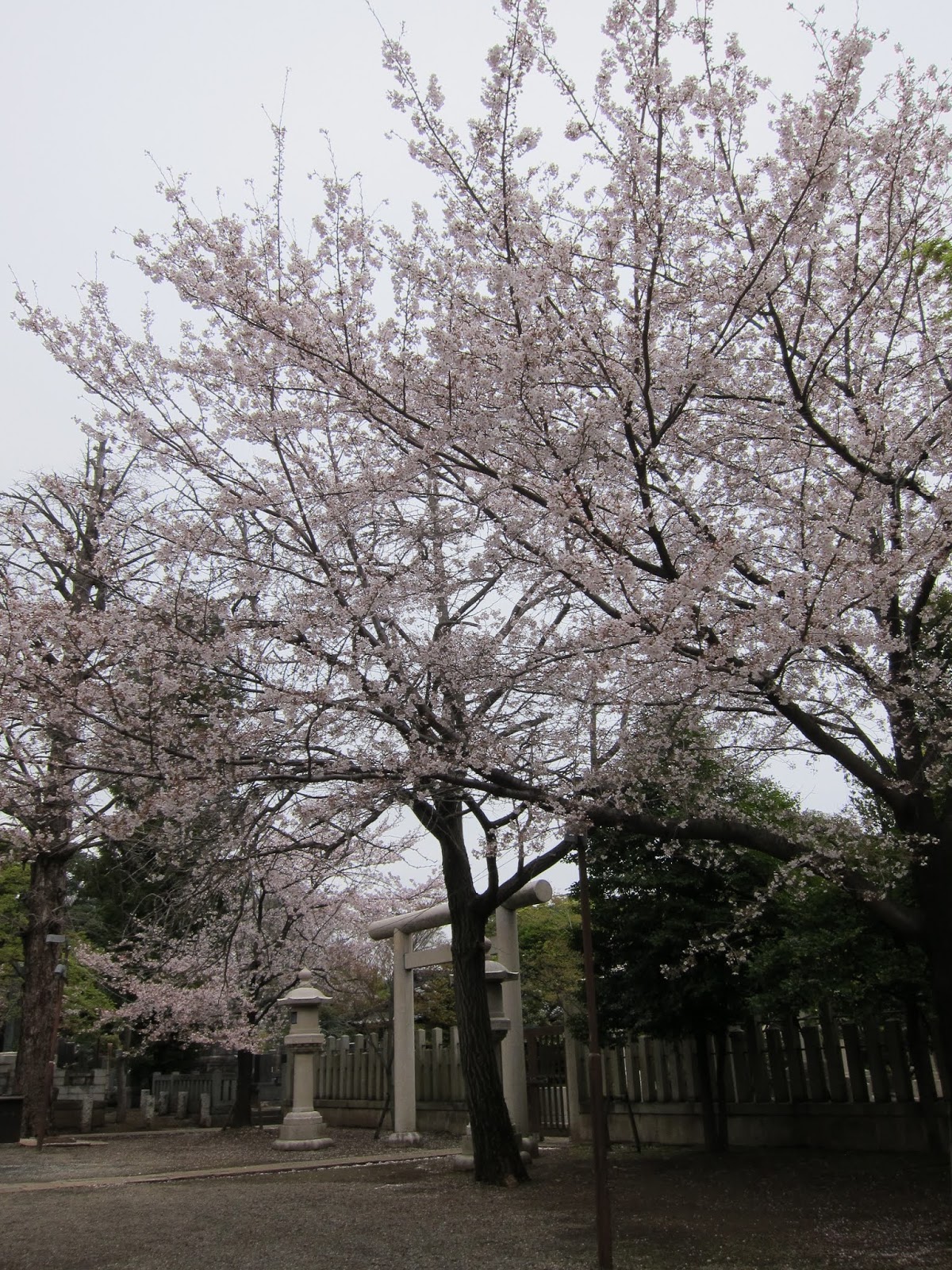
More sakura and a lovely white torii and toro.

I am not sure what shrine this is for. It is possible this leads to graves. Because there is a cemetery here also. And some rather important people are interred here. Prime ministers, Emperor Meiji concubines, and one of their sons, Prince Mikasa.
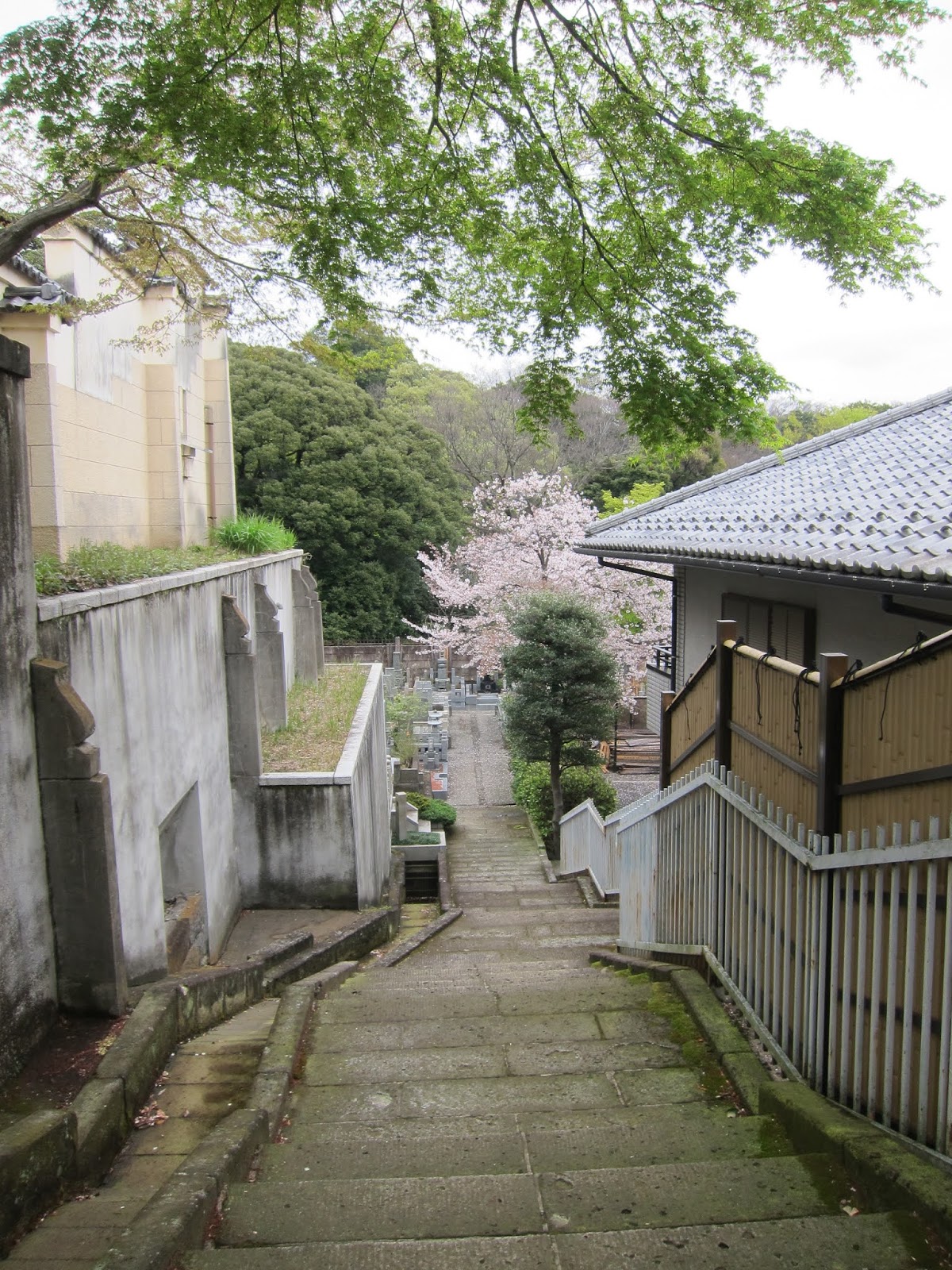
Because I spent a lot of time looking at buildings and more at Gokoku-ji, I did not spend time at 豊島岡墓地, Toshimagaoka Cemetery. This path is one of many that lead there. 

And this path leads to my last post about Gokoku-ji. And Mt Fuji. Sort of.

Wednesday, June 24, 2020

Gokoku-ji Courtyard

The area around Kannon-do at Gokoku-ji was spacious. Surrounding this were various things. Like these lovely stone toro (lanterns).

Over time, many monuments and markers were placed around the building.

Probably the loveliest area was by the shoro, (bell tower).

Shaped pine trees and sakura filled the space. This must be wonderful under a blue sky.


Even though the temple is a place to worship the kami enshrined here, Gokoku-ji is also a place of final resting. One of the large monuments here is 霊 廟, Reibyo. It is an underground mausoleum. 


There are a number of Buddha statues in different places, including this very large Buddha sitting on a lotus flower.


Besides Buddha, there was also this almost jolly looking Ungyo Nio.

Along with several Jizo statues.


I wish these photos showed how lovely the sakura trees were. I spent a bit of time here, of course.


Finally I went to look at some other areas at Gokoku-ji. This is 鐘 楼, shoro, their bell tower.


This building is 大師堂, Daishi-do. Which translates into Grandmaster Hall. It is the hall of the Medicine or Healing Buddha.

One of the older buildings on the ground, it was re-established here in 1701. I assume it was moved from another place but it is not noted on the temple's website.

Even though I did not see all of the buildings and places at Gokoku-ji, I do have a few more to share. In my next post.

Thursday, June 18, 2020

More of Mejiro Teien

Continuing with my springtime walk around Mejiro Teien. 

Which was also snowy. Mejiro Teien was designed in 1990 by Kunie Ito, in the style of a traditional Japanese walking garden. The main feature is the large pond that is surrounded by small landscapes which are viewed while people walk the circular path around the pond.

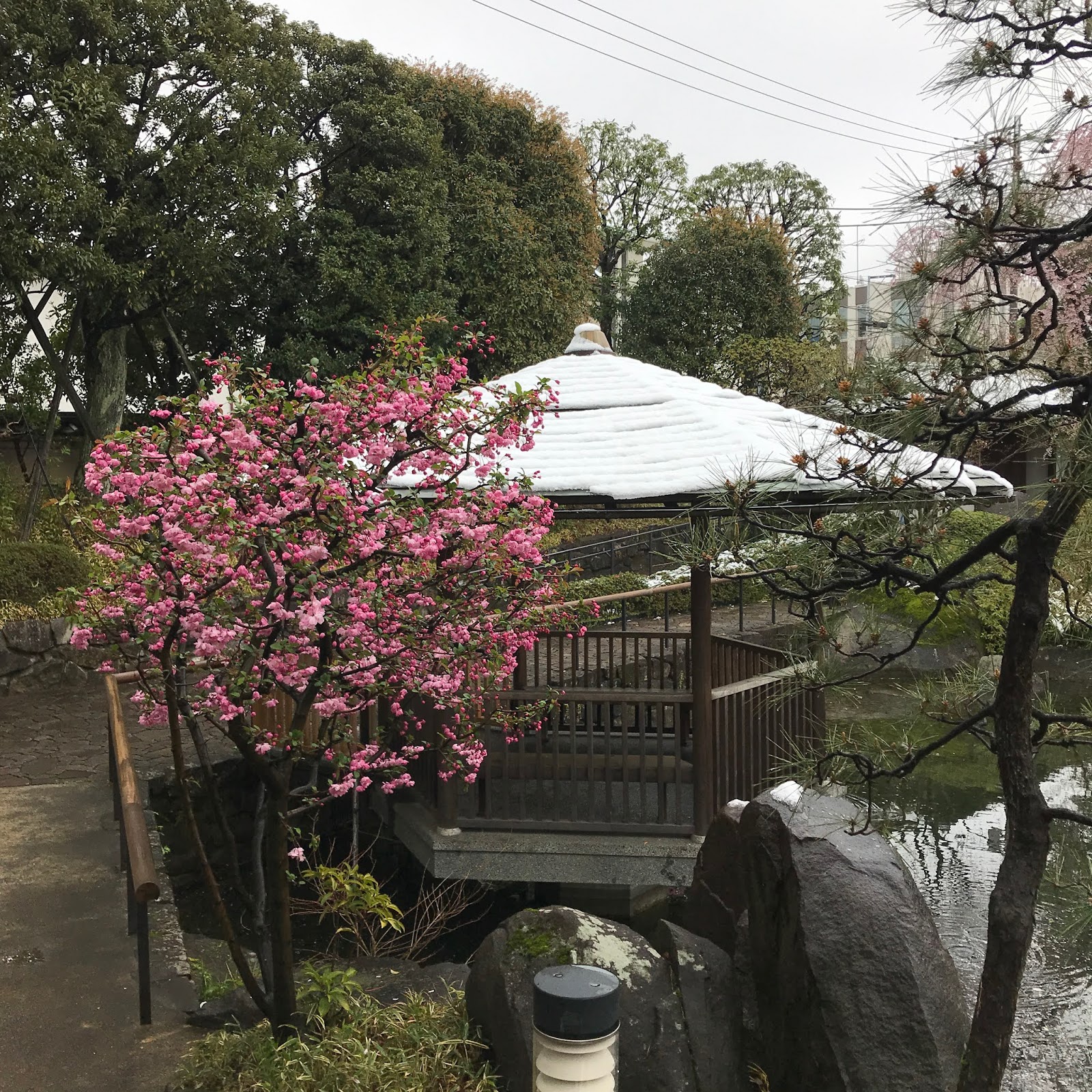
One of the architectural features is the hexagonal viewing pavilion that is suspended above the pond. There is a Mashiko ware piece at the top of the roof that has an image of a red bird. The red bird, akai tori, is a reference to a children's literature magazine, 赤い鳥.

The pond has many koi in it. Even in the cold weather they swam in the water that flowed into the pond from the four meter high waterfall. The pond is about 500 square meters and about 1.2 meters deep.

Continuing my walk I reached this very tall stone pagoda. 

One of those many small landscape views and it was gorgeous. Thanks to the cloudy sky it made visibility of the pond clear and reflective. 

The other reference to Akai Tori is the the tea hall, Akatori-an. It is also dated from 1990. The sukiya style building's architect was Toru Ozeki. The name also comes from the magazine, which was founded by writer Miekichi Suzuki in 1918. It sits on a stone wall next to the pond and the wooden tiled roof has Kitayama cedar from Kyoto. People are allowed to rent the building for events, tea ceremonies, photos and filming.


Near the pavilion there is another sakura tree. 


Reaching the pavilion, I carefully sat for a few minutes, taking in the beautiful views while the snow slid off the roof. 


After spending a bit of time in the garden, it was time to leave. Did I mention it was cold? 

I could not resist taking a few more minutes enjoying this tree. 

I imagine it looks glorious when the sky is blue. I would love to see this.


 A pair of eastern spot-billed ducks arrived to enjoy the water.


One last photo from the garden.