Mana's Beautiful World is Forever

Mana's Beautiful World is Forever
Showing posts with label wood carvings. Show all posts

Monday, September 24, 2018

There Once Was a Castle Here

 Back on that curved road and what did I see? More stairs and a torii. Would I save my energy for my intended destination or would I go up those stairs?

It's a shrine. Of course I went up the stairs. What I found is Hiratsuka-jinja. A shrine complex with a lot more going on than one sees at first glance.

 For it is a very old shrine by Tokyo standards. Established in the Heian period, 1118 to 1119, some of the buildings escaped damage in WWII. Like the Kagura building. It may date from the Edo period as do others on the complex.
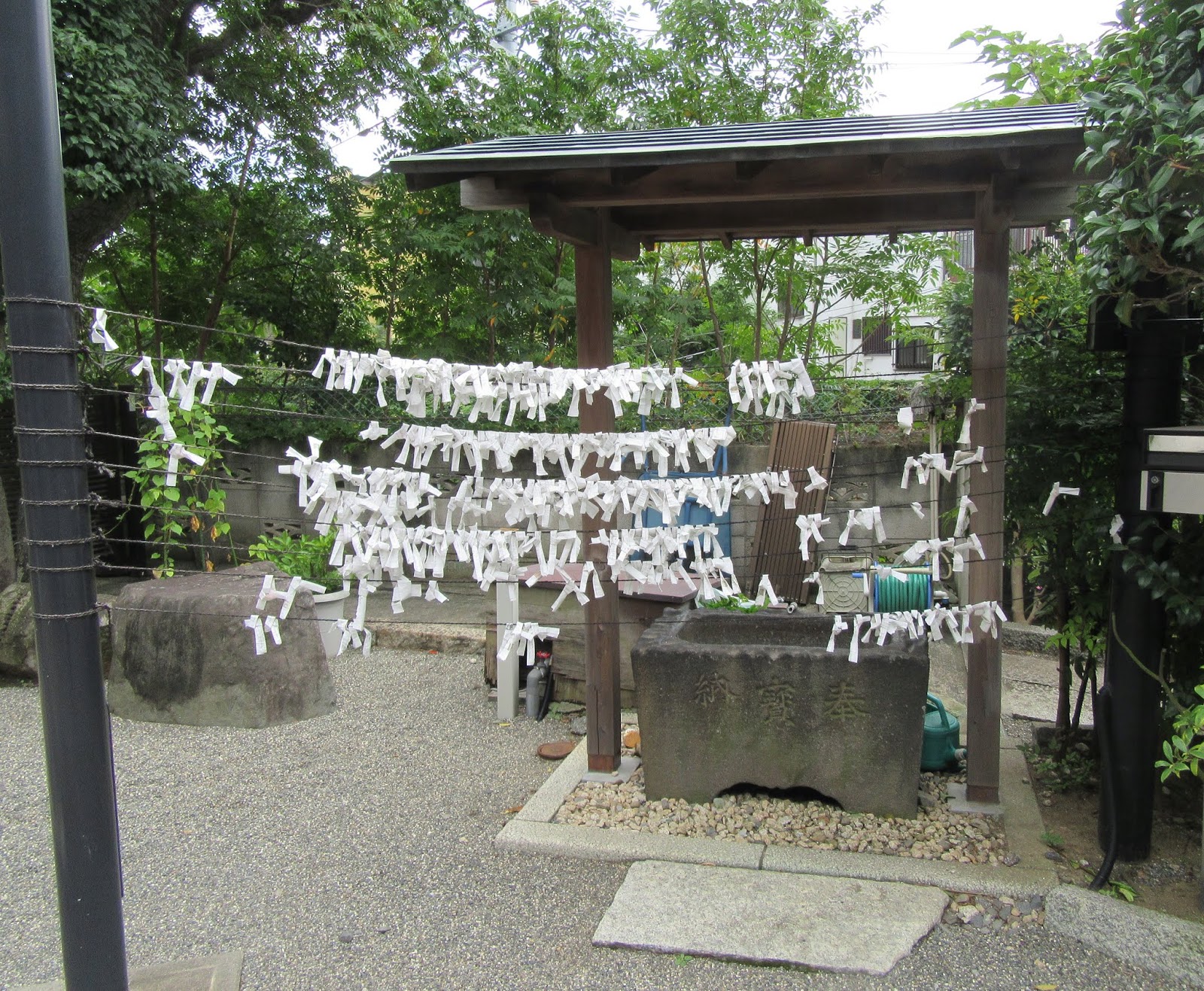
Compared to other well known shrines in Tokyo, there seems to be a mix of very old, as the chozuya water basin, and more utility like using a metal pole to hold up the omikuji fortune papers. 

 The main shrine, Haiden, is very interesting even if you don't know any of the history of the place. It was built in the late Edo period, 1839, and also survived WWII. The main kami here is Hachiman, god of archery and war and protector of Edo. A kami revered by samurai. Remember the kami at the previous shrine, how they were related to samurai? Well, Hiratsuka Shrine was established as part of a samurai's castle.

Hiratsuka Castle was a holding of the Toshima Clan back in the Heian period. This was the clan's chief seat of governance in the Kanto area. Another interesting point is what is behind these buildings. The ropes are there around them because it's not open to the public. One time, three Genji brothers were on their way to conquest Oshu and rested here while traveling there. On their return, they stopped here again and offered their armor as thanks. The armor was buried in a mound behind the buildings as sacred. This mound gives it's name to the shrine complex. Because the mound is flat and has no height. 

The castle was lost near the end of the 1400's and became abandoned when the Toshima clan fell following the Kyōtoku incident, a conflict over control of the Kanto region.
What is left are the shrines.

Besides that really interesting history, the main shrine has really amazing features, like these komainu. 

The shishi styled one has a small komainu!  

And there are komainu carved on the temple also. 

I wish my photos were better but the high humidity and cloudy day made it a little difficult. Still I hope you can see the impressive carving. 

Even more surprising were the two carved elephants, one on each side. These are baku, dream eating supernatural beings. They are protectors along with the komainu. 

There were smaller shrines on the grounds. 

Another with an amazing tiled roof and wood carvings. This is the Sugawara shrine. I do not know the kami enshrined here. 

It has an impressive dragon on the lintel piece.

There are also a couple Inari shrines on the grounds. They looked a little neglected. 


The kitsune statues appeared to be older and worn. 


The sign on this shrine says something about not leaving payments, or something like that. Unfortunately I have not been able to find information about these smaller shrines. In fact, everything I found out has been on a couple Japanese websites, so I am hoping it is accurate. 

Since I came in the back entrance, like I often do, I was walking out to the front of the shrine complex. This chozuya is by the smaller shrines. 

 The entrance torii.

The two stone entrance lanterns. 

I headed towards my planned destination, hoping to find what I didn't see in March. That's the next post.

Tuesday, September 6, 2016

Koami Jinja Shrine in Nihonbashi


Imagine walking down a street one night and seeing this. I knew Koami Shrine was nearby but had not visited. I was on my way to Shinjuku but could not resist stopping here. It's so much prettier in person.

Koami Jinja is one of the more popular shrines in the area. Seeing it all lit up made it understandable why. This is the Kagura Hall.

Using paper lanterns for advertising is nicer than flashing signs.

Koami Jinja is another shrine that has so many different features. It's not know exactly when this area was considered sacred but it is assumed a monk lived here at least 1000 years ago. The worship of Koami Inari Daimyōjin began in 1466 when it was believed the god Inari helped save people here from a plague.

The shrine's site says the building did not survive the Great Kanto Earthquake in 1923 but many parts of the shrine were saved. The current building was built in the 1920's of cypress wood and did not completely burn down during the firebombing of WWII. Another site gives 1942 as the date the buildings were built but I would think the shrine's site would be more accurate.

The other main god worshipped here is Benzaiten, goddess of love, luck, the arts and flowing things like water and music. Her father was a dragon king and often she is depicted with a white dragon. So it's no surprise the chōzubachi at Koami has dragon spouts.

Really amazing dragon spouts. My photo does not do them justice. The eyes are inlaid with a different metal which gives the appearance that they might start moving.

The main shrine is also impressive with extraodinary wood carvings. I wish I had gone back during the day to take more photos. Next time I will try to do that.

One of the gorgeous wood carvings. A waterfall with a maple tree.

And up above two dragons. One descending.

One ascending.

These are hand carved and truly worth seeing if you are ever in the area. I wish my photos were better because there are so many detains on this shrine.

Koami Jinja is a popular Seven Lucky Gods shrine as you can tell by all the charms they have available.

The ema (prayer plaques) have Benzaiten's white dragon or the Seven Lucky Gods. Thinking of Benzaiten, often female entertainers would worship her. Given that Ningyocho was a major entertainment area it makes sense there would be a shrine like this here.

Some of the ema hung up with their prayers and wishes on them. Along with o-mikuji (fortunes). Usually people tie them up at a shrine when they receive a bad fortune. Koami's are unique in that they come in little silkworm cocoon mayudama. I don't know if they are real cocoons. So both are hung up in hopes that the gods will reverse the bad luck.

Koami Jinja is part of the Seven Lucky Gods pilgrimage in Nihonbashi. Besides Benzaiten there is also a statue of Fukurokuju. He is the god of happiness, wealth and longevity. Surrounding him are plaques of the other lucky gods.

A couple of the mayudama were hung on the small tree next to him. Perhaps people prayed to him to prevent the bad luck?

Benzaiten was officially enshrined here back in 1869 when the government separated Shinto shrines from Buddhist temples (shinbutsu bunri 神仏分離 began in 1868 under the Meiji Restoration). Given that people pray to her and Fukurokuju for wealth, it leads to the other reason this shrine is so popular. Money washing.

Benzaiten shrines have a water feature since she is a river kami or god. Koami has a small well (Zeni-arai-no-i). At the well and at this statute of Benzaiten people wash their coins in hopes that they will multiply. Since I didn't know about this before my visit I didn't wash money.

Koami Jinja is now one of my favorite shrines. Definitely worth seeing along with trying some of the food offered in the Ningyocho Nihonbashi area. Here is the website for the Koami Jinja Shrine.