Mana's Beautiful World is Forever

Mana's Beautiful World is Forever
Showing posts with label Bunkyo. Show all posts

Friday, June 26, 2020

Climbing Otowa Mount Fuji

When I saw the marker near this torii, I remembered what this was.

Not this music themed marker which unfortunately I do not know what it is for. There are a lot of markers at Gokoku-ji, including one to mark where the first veterinarian school in Japan was. It's actually not surprising that the location was here, since Shogun Tokugawa Tsunayoshi really loved dogs and even enacted laws protecting them.

However there are other markers here that might give indication as to what this part of Gokoku-ji is about.

Because once you cross this bridge, you are entering another place.

Going under the white torii along the stone path.

In front of you, many more markers, and stone steps going up.

The curious thing is, many of the markers are shaped like a mountain.
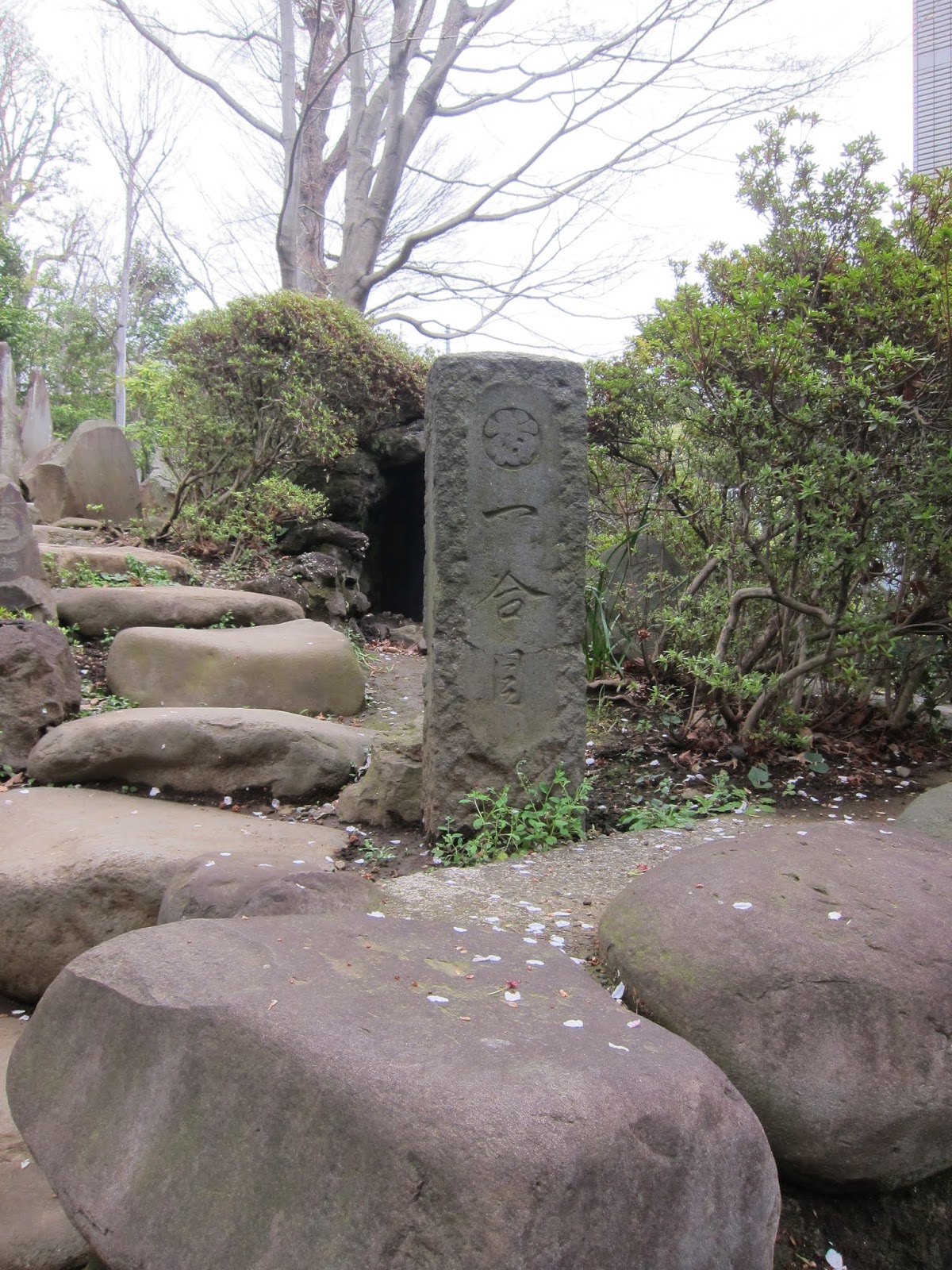
While some have information on them, indicating you have reached the first stage.

One stone seems to have been chosen because it is like a natural water basin, a chozubachi.

In front of a stone engraved with the likeness of a tengu. Tengu are now thought of as protectors of mountains.

A little human made cave. Perhaps it was made to represent a lava cave like the Otainai lava caves.

Another engraving, difficult to see because it is worn down. Perhaps it is 木花咲耶姫 , Konohanasakuya-hime, also known as Sakuya-hime, protector who keeps volcanos from erupting and protects women during child birth.

Back to the "mountain". Because a mountain is what this hill represents.


I wondered if anyone has documented what all of the markers are for.

Some of the makers along the stone path indicate "stages", as if you are climbing a mountain.

I think I see the top.

This hill has been here a very long time. I wonder if Edo nobles would walk up here.

The little white shrine and post next to it are newer. I think the marker next to it says "big stone" 

Even though this hill is not terribly high, it felt good to reach the top.

Because I had just climbed 音羽富士, Otowa Fuji. This part of the hill is a representation of Mount Fuji's caldera.

Looking down you can get an idea of the size of this little 富士塚, Fujizuka. A Fujizuka is a small representation of Mount Fuji, built for people to climb.

The concept of this is that a person can climb a representative of Mount Fuji, without going to Mount Fuji. These began being built during Edo times and hiking up them became also a religious experience.

There are a number of these less strenuous Mount Fuji in Tokyo, and in other places in Japan. Often they are covered with rocks brought from Mount Fuji.


Back down from the mountain, my visit to Gokoku-ji Temple was completed. There was one more place I wanted to go to, so that will be my next blog post.

Thursday, June 25, 2020

Around Gokoku-ji

Just a few more photos of buildings and such around Gokoku-ji.

There is a variety of shrines and other buildings on the grounds of the temple. Some are newer dating from early 1900's, and some are much older, having survived Tokyo's fires and WWII bombings.

This is 薬師堂, Yakushi-do, another healing Buddha shrine. The bell shaped windows and other features are notable. The shrine was moved to this location in 1691, so it was one of the first buildings to become a part of Gokoku-ji.

I spent a little time here, along with this temple cat.

The cat was friendly. I took that as a good sign. Maybe the healing Buddha would keep me safe from the virus? Or at least a non-stressful trip home.

Speaking of trips, there are Jizo for that. And there are Jizo for other things. This one is Hitokoto Jizou. 

Actually this Jizo is a little unusual. Not just for travelers, but for people who desire something. The information I found was conflicting as to whether you can only pray for one thing, or only say one word when you pray to this Jizo. Either way, care is needed in deciding what you want to pray for.


I am not sure where this gate leads. But the wood work is impressive.


A temizuya for water purification.


Another Jizo. This is the Migawari Jizo, who is a protector of anyone who is suffering from being abused. Migawari Jizo will take your place in the conflict.


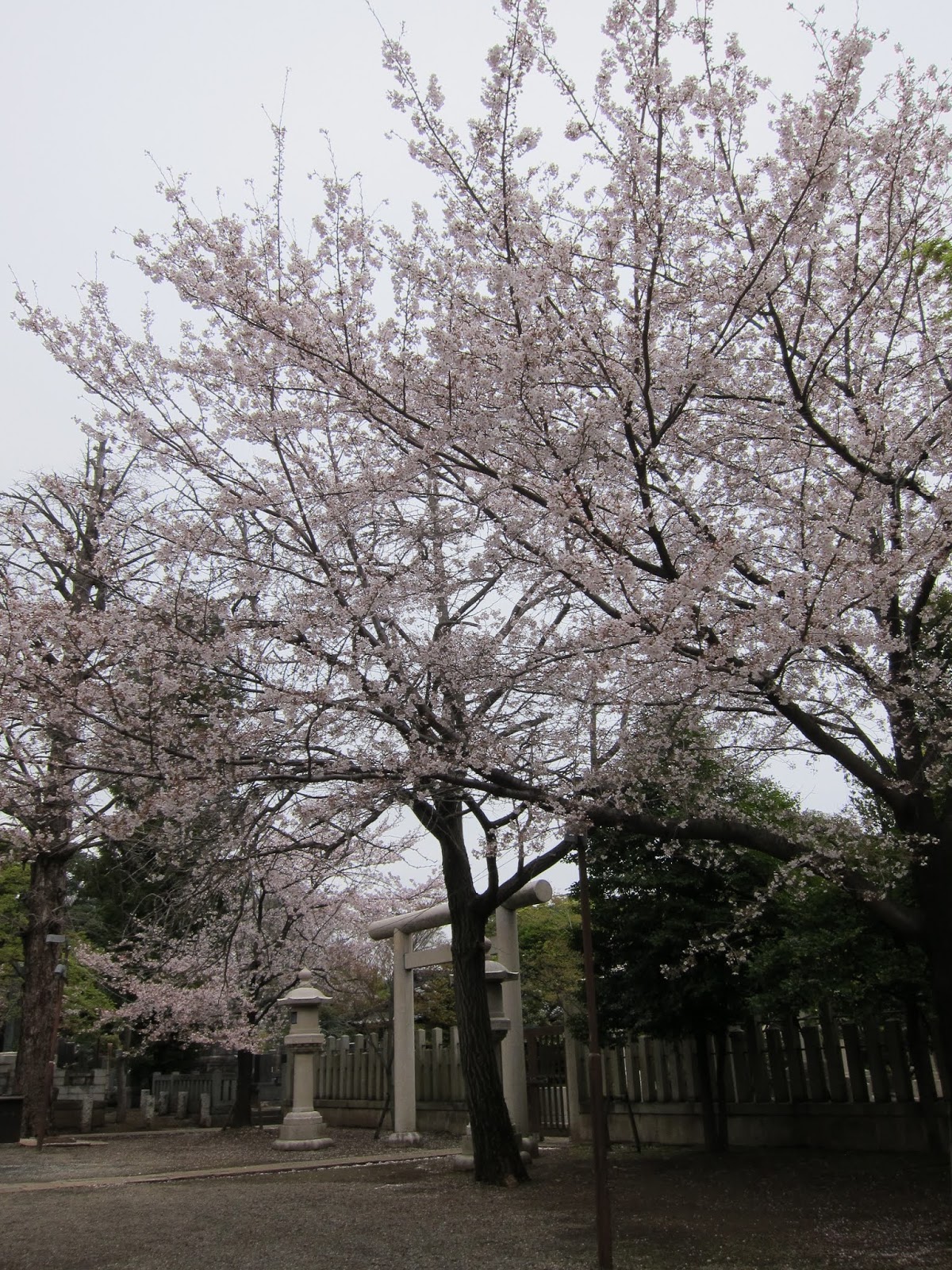
More sakura and a lovely white torii and toro.

I am not sure what shrine this is for. It is possible this leads to graves. Because there is a cemetery here also. And some rather important people are interred here. Prime ministers, Emperor Meiji concubines, and one of their sons, Prince Mikasa.

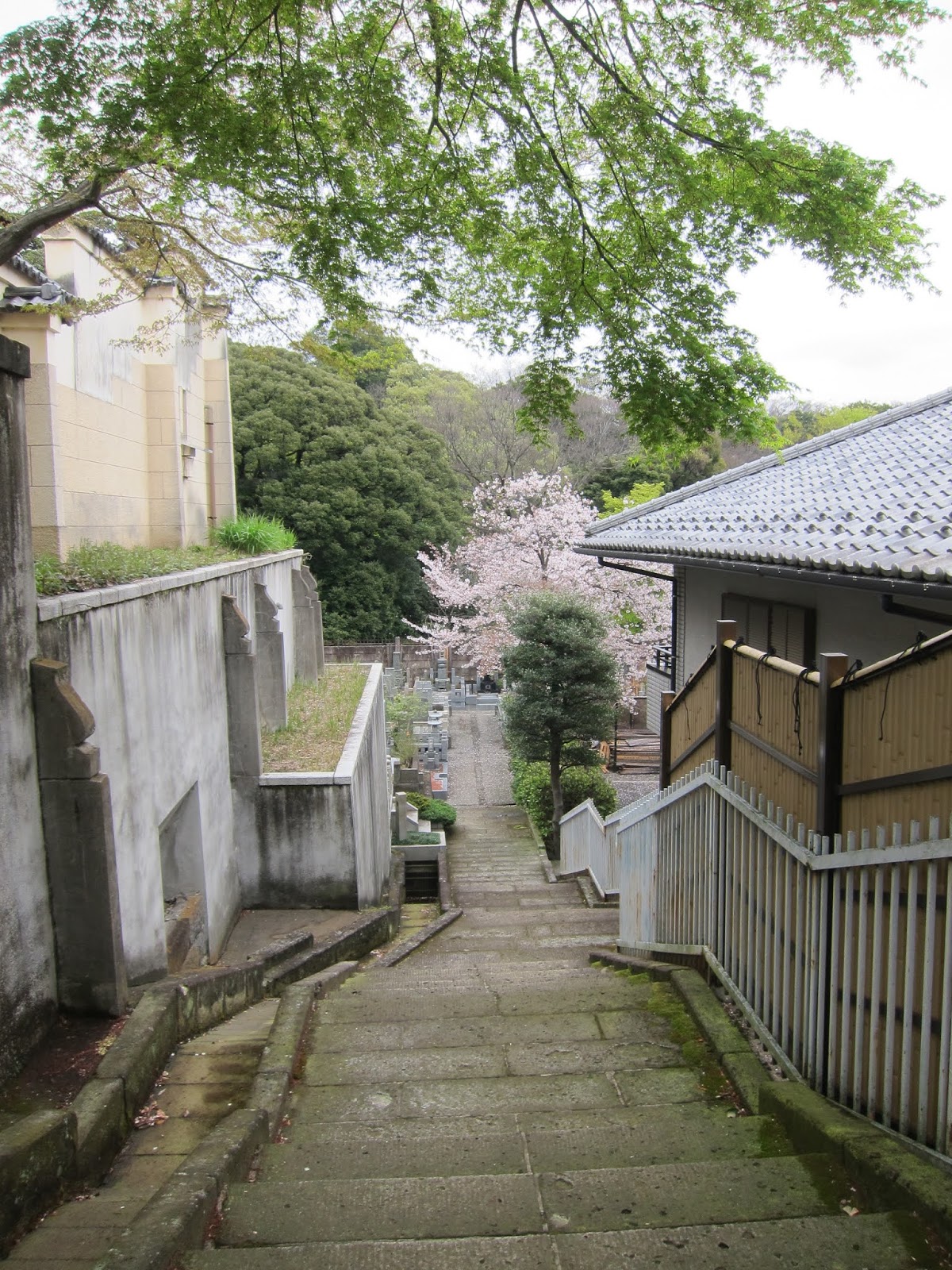
Because I spent a lot of time looking at buildings and more at Gokoku-ji, I did not spend time at 豊島岡墓地, Toshimagaoka Cemetery. This path is one of many that lead there. 

And this path leads to my last post about Gokoku-ji. And Mt Fuji. Sort of.

Wednesday, June 24, 2020

Gokoku-ji Courtyard

The area around Kannon-do at Gokoku-ji was spacious. Surrounding this were various things. Like these lovely stone toro (lanterns).

Over time, many monuments and markers were placed around the building.

Probably the loveliest area was by the shoro, (bell tower).

Shaped pine trees and sakura filled the space. This must be wonderful under a blue sky.


Even though the temple is a place to worship the kami enshrined here, Gokoku-ji is also a place of final resting. One of the large monuments here is 霊 廟, Reibyo. It is an underground mausoleum. 


There are a number of Buddha statues in different places, including this very large Buddha sitting on a lotus flower.


Besides Buddha, there was also this almost jolly looking Ungyo Nio.

Along with several Jizo statues.


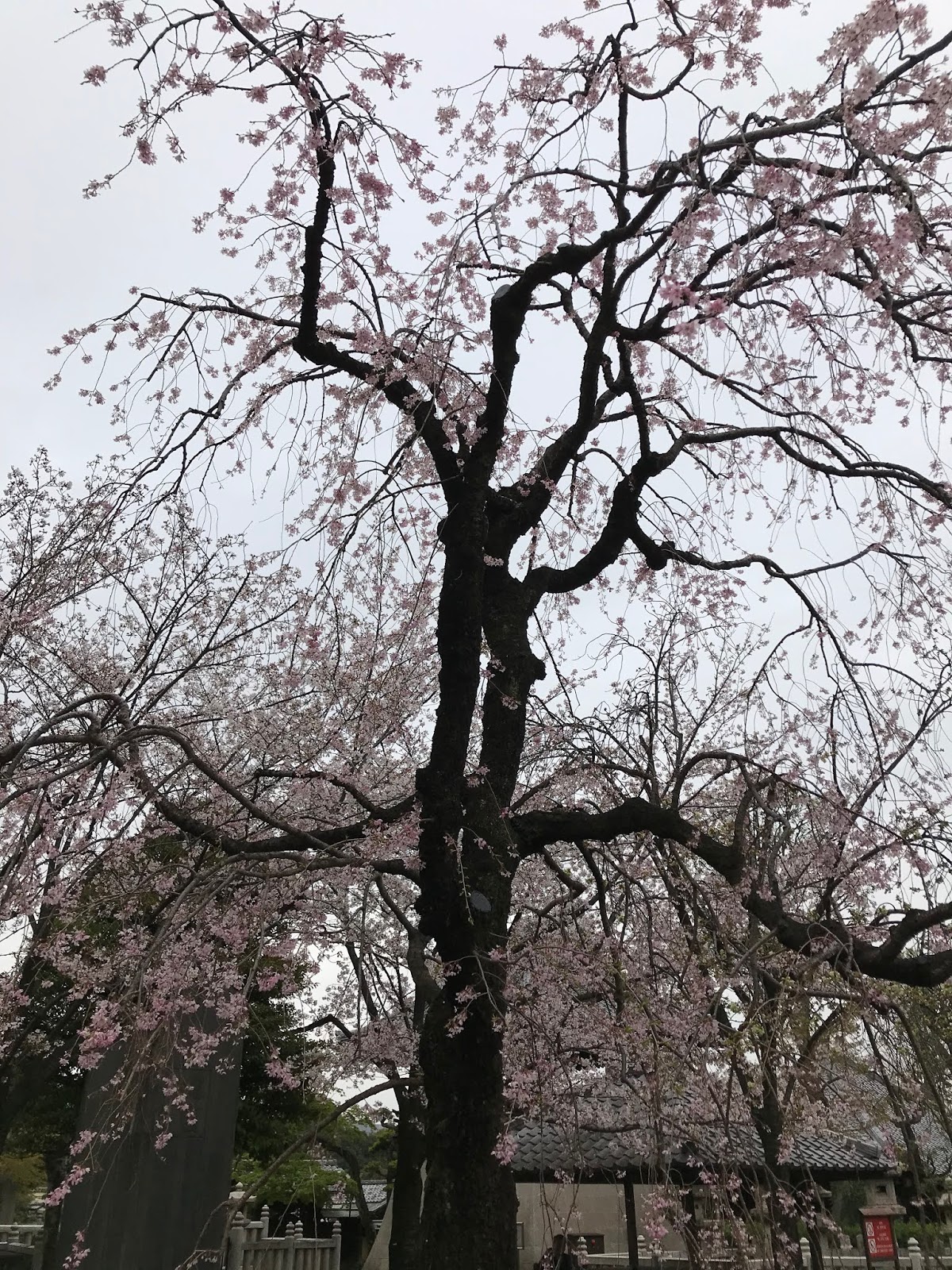
I wish these photos showed how lovely the sakura trees were. I spent a bit of time here, of course.


Finally I went to look at some other areas at Gokoku-ji. This is 鐘 楼, shoro, their bell tower.


This building is 大師堂, Daishi-do. Which translates into Grandmaster Hall. It is the hall of the Medicine or Healing Buddha.

One of the older buildings on the ground, it was re-established here in 1701. I assume it was moved from another place but it is not noted on the temple's website.

Even though I did not see all of the buildings and places at Gokoku-ji, I do have a few more to share. In my next post.